THE KEY TAKEAWAYS
At a glance
- Build meals around the person's appetite, culture, chewing ability, health instructions and preferred schedule.
- A caregiver can shop, prepare and store agreed foods, while therapeutic diets and unexplained weight or swallowing changes need professional advice.
Start with foods the person will actually eat
Healthy eating guidance only helps when it fits the person. Ask about familiar dishes, portion size, spice level, meal times, religious or cultural practices and foods they no longer enjoy. HealthLink BC notes that changes in appetite, chewing, shopping and meal preparation can make eating well harder with age.
Keep a short list of reliable breakfasts, lunches, dinners and snacks. Include protein foods and a variety of vegetables and fruit where appropriate, while following any instructions from the person's clinician or dietitian.
Design the plan around energy and access
A meal plan should account for how groceries arrive, who can safely chop or lift cookware and how leftovers will be cooled, labelled and reheated. Frozen and canned produce can be useful, and batch cooking can reduce the number of demanding kitchen sessions.
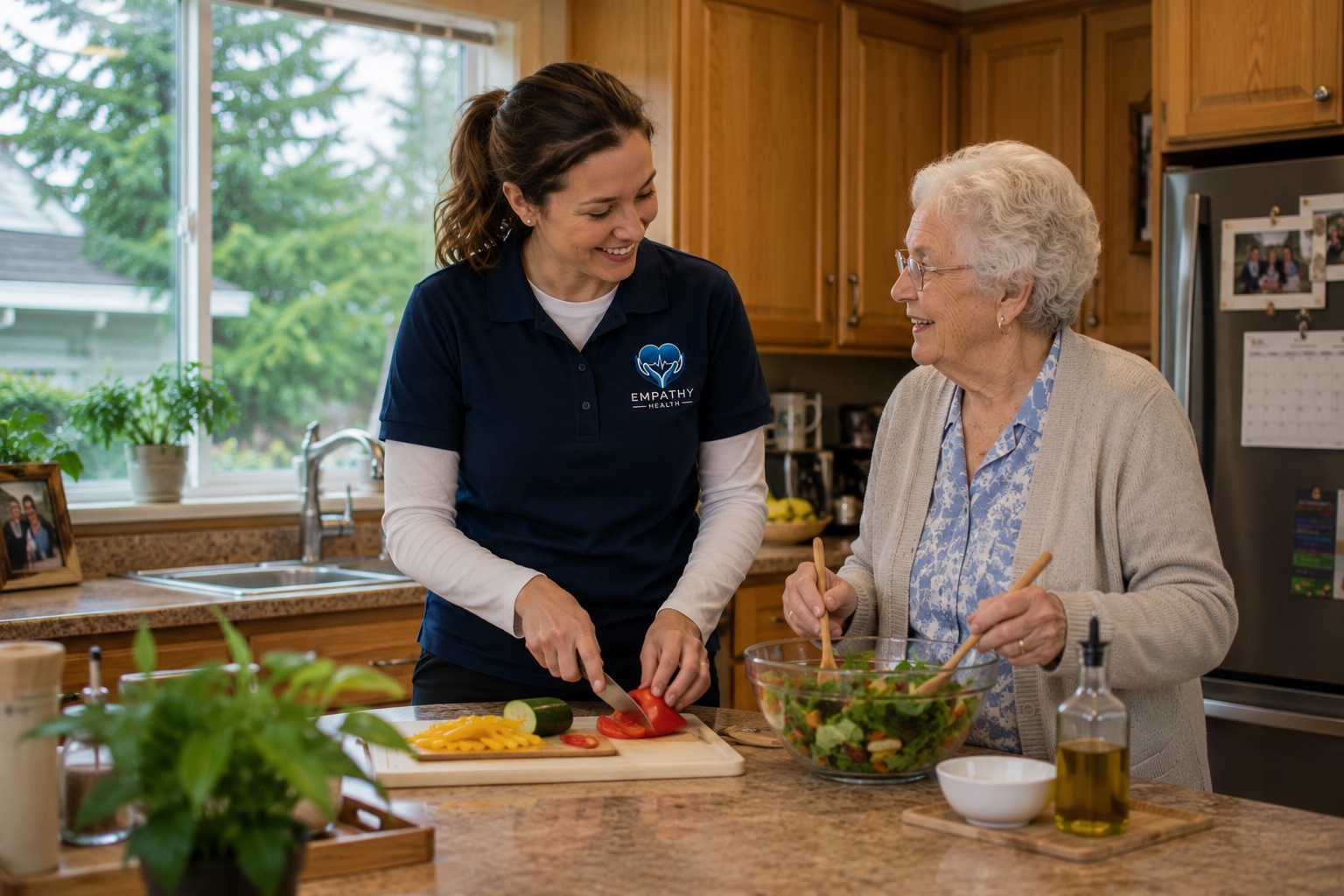
For caregiver visits, specify whether the priority is shopping, preparation, cooking, eating together or storing food for later. Leave enough time for safe preparation and cleanup rather than listing more dishes than a visit can reasonably include.
| Barrier | Planning response |
|---|---|
| Small appetite | Offer smaller, appealing meals more often and raise persistent concerns with the health-care team |
| Difficulty chewing | Choose softer options and seek dental, medical or dietitian advice as appropriate |
| Low energy | Prepare components in batches and keep nourishing snacks within easy reach |
| Eating alone | Add a shared meal or companionship visit when the person wants company |
Know when meal support is not enough
Unplanned weight loss, repeated coughing or choking with food, dehydration, persistent nausea or a sudden change in appetite deserves health-care follow-up. A caregiver should report factual observations and follow the established plan, not diagnose the cause or create a therapeutic diet. HealthLink BC's 8-1-1 service can connect BC residents with a registered dietitian for individualized nutrition questions.
Frequently asked questions
Can a caregiver prepare family recipes?
Yes, when the recipe fits the agreed plan and available visit time. Share ingredients, instructions, food-safety expectations and any clinician-provided dietary restrictions.
Who should advise on a special diet?
A registered dietitian or the appropriate health professional should provide individualized therapeutic diet advice. The caregiver can then follow the written plan.
Sources and further reading
This guide draws on the following resources. Follow the links for the source organizations’ full guidance.